

Commons:Village pump/Copyright
This Wikimedia Commons page is used for general discussions relating to copyright and license issues, and for discussions relating to specific files' copyright issues. Discussions relating to specific copyright policies should take place on the talk page of the policy, but may be advertised here. Recent sections with no replies for 7 days and sections tagged with {{section resolved|1=~~~~}} may be archived; for old discussions, see the archives.
- One of Wikimedia Commons' basic principles is: "Only free content is allowed." Please do not ask why unfree material is not allowed at Wikimedia Commons or suggest that allowing it would be a good thing.
- Have you read the FAQ?
- Any answers you receive here are not legal advice and the responder cannot be held liable for them. If you have legal questions, we can try to help but our answers cannot replace those of a qualified professional (i.e. a lawyer).
- Your question will be answered here; please check back regularly. Please do not leave your email address or other contact information, as this page is widely visible across the Internet and you are liable to receive spam.
- Please do not make deletion requests here – instead, use the relevant process for it.
 |
SpBot archives all sections tagged with {{Section resolved|1=~~~~}} after 1 day and sections whose most recent comment is older than 7 days. |
Are the CC licenses of these Youtube videos valid? (Sinn Sisamouth)
[edit]So Sinn Sisamouth is a Cambodian musician who died c.1976, but regardless he has a verified Youtube channel. I noticed that starting from this video up till the most recent upload are under CC licenses.
I don't know how this channel gets managed, but I know from Commons:Deletion requests/File:Sinn Sisamouth.jpg that the modern copyright holders of his stuff are an NGO that preserves Sisamouth's work, and despite their registered info being outdated are who I infer to be behind this channel.
Given everything, is this enough to say that the songs that have been released under CC licenses on Youtube to be eligible to be uploaded onto Commons? Furthermore, as there is a portrait of Sinn Sisamouth in these videos, which happens to be the same one referenced in the aforementioned DR (which allegedly the SSA did permit to be uploaded here per original uploader, but just never went through VRT), is that now eligible to be undeleted? TansoShoshen (talk) 00:15, 27 February 2026 (UTC)
- @TansoShoshen: Any reason not to contact the Foundation and/or the YouTube channel owner and try to clarify the situation? - Jmabel ! talk 06:05, 27 February 2026 (UTC)
- @Jmabel As far as I'm aware their contact info is outdated, their website was last updated in 2012. The Youtube channel does have a different email attached. I'll go ahead and shoot them an email there.
- I do want to say that I've had personally bad experiences with trying to get copyright holders to send over information to VRT, they have always never done so for all attempts. TansoShoshen (talk) 13:52, 27 February 2026 (UTC)
- Update: so the Yahoo email associated with the NGO whose website was last updated in 2012 is dead. The other 2 emails went through, and I CC'd VRT so hopefully there's no problems on that front. TansoShoshen (talk) 18:58, 27 February 2026 (UTC)
- So there's a lack of any updates now that the work week has begun. I'll give them the rest of the week but, in the event that we still get no response, should we presume that the CC licenses on Youtube are valid?
- There's still the eLibrary we have to sort out. TansoShoshen (talk) 00:58, 3 March 2026 (UTC)
- So things are still radio silent (apart from VRT's response), I'm going to go ahead and request undeletion of the original Sinn Sisamouth photo we had and go from there. TansoShoshen (talk) 20:15, 6 March 2026 (UTC)
- Update: so the Yahoo email associated with the NGO whose website was last updated in 2012 is dead. The other 2 emails went through, and I CC'd VRT so hopefully there's no problems on that front. TansoShoshen (talk) 18:58, 27 February 2026 (UTC)
- The Cambodian Vintage Music Archive (CVMA) controls that account, or at least its releases. The videos posted under “video”, are not managed by the CVMA, but most of the music under “releases” are and should have a description stating if they were uploaded under the CVMA. The CVMA are an active US 501(c)(3) non-profit that have legal rights over Sinn Sisamouth plus practically all the other pre-genocide singers’ music but I’m not sure when it comes to visual material. They also work with the Ministry of Culture, Department of Copyright.
- For portraits, and in specific reference to the former picture on the Sinn Sisamouth Wikipedia page.
- 1. The eLibrary of Cambodia, that holds this record sleeve and photo, which is an academic initiative supported by the government, specifically the Ministry of Education, Youth, and Sport as well as the Buddhist Institute, has stated “អ្វីៗទាំងអស់ដែលតម្ដល់ទុកនៅក្នុង eLibrary of Cambodia ជាសម្បតិ្តរបស់ខ្មែរទាំងអស់គ្នា សម្រាប់បម្រើជាប្រយោជន៍សាធារណៈ ដោយមិនគិតរក និងយកកម្រៃ ព្រមទាំង អាចឱ្យយើងខ្ញុំបានជួយប្រទេសជាតិ បានមួយភាគតូចផងដែរ ។” translation: “Everything stored in the eLibrary of Cambodia is the property of all Cambodians, to serve the public interest, without any consideration or charge, and to enable us to help the country in a small way”.
- 2. The eLibrary of Cambodia also states “សម្បតិ្តខ្មែរណាដែលបង្ហោះលើវេបសាយយើង បើលោកអ្នកជាម្ចាស់ ចង់ឱ្យយើង
- ដកចេញ យើងនឹងគោរពតាមសំណូមពរ” translation: “If you are the owner of any Cambodian material on this website and want us to remove it, we will honor the request”. That portrait still remains in the database.
- It seems as tons of portraits have been able to be used freely because legal rights over them either haven’t been signed for a long time or do not exist. Regarding Wikipedia taking down former photos on the Sisamouth page, I’m highly sure it was due to people claiming the portrait was entirely their work rather than the use of it in the first place. CiteMeToSleep (talk) 15:46, 27 February 2026 (UTC)
- Thank you again for your input @CiteMeToSleep, I actually now remember some of the context of at least 2 of the deletions. There was a flickrwasher who uploaded several photos themselves, claiming they were under a free license. TansoShoshen (talk) 19:04, 27 February 2026 (UTC)
Personality Rights
[edit]Please help with a personality rights issue:
A user - professional photographer apparently - has uploaded a number of portraits from his oeuvre under a CC 3.0 license. So, in terms of copyright, this should be o.k.; it's his own business how he licenses his images.
However, it turns out now that apparently he didn't quite know what he was doing. He had his models sign releases that covered all use within the project he was doing - but no more than that. He clearly does not have their consent for commercial use and all the other use cases a CC 3.0 license will allow. In other words: This is not the free content Wikimedia Commons requires as its first basic principle.
Now as far as his own copyright is concerned, I really don't care. It's his own business if he doesn't read the fine print before licensing a picture. However, this seems quite unfair or even illegal to his models. Not sure if this is a deletion reason after these pictures have been online for some time, but I would think that non-free content that has been uploaded without consent doesn't miraculously turn into free content just by being uploaded long enough.
The pictures this is about are these:
https://commons.wikimedia.org/wiki/Special:ListFiles/Kato2807~dewiki
https://commons.wikimedia.org/wiki/Special:ListFiles/Kato~dewiki
https://commons.wikimedia.org/wiki/Special:ListFiles/Kato287
Three different user names, but clearly the same person.
Thanks for looking into this, --~2026-12968-58 (talk) 16:22, 28 February 2026 (UTC)
- The fact that a photographer does obtain a consent from the models for commercial reuse does prevent the photographer from licensing his works under any license he wants. The problem of consent is up to resusers to solve. Ruslik (talk) 20:17, 28 February 2026 (UTC)
- It would be quite appropriate to put {{Personality rights}} on any of these templates that may not have that. - Jmabel ! talk 21:56, 28 February 2026 (UTC)
- @Ruslik0: Did you mean to post "doesn't prevent" above instead of "does prevent"? -- Marchjuly (talk) 23:26, 28 February 2026 (UTC)
- Yes)) Ruslik (talk) 19:19, 4 March 2026 (UTC)
Thanks for your replies! I'll admit that I am confused now, and not only by the question if "doesn't" or "does" was intended... which might alter the meaning just a tad. :-)
The thing is, the models never consented into this type of free use, and the photographer never intended this type of free use. I don't care about the photographer, it's his own fault, but the models had no say in this and were not informed of this type of use.
Reusers should be able to rely on the licenses given, or why would we even bother to tag images with a license? The "free content" guideline would be rendered absurd if reusers would then be required to find out what's applicable to a particular picture. --~2026-12968-58 (talk) 00:35, 1 March 2026 (UTC)
- @~2026-12968-58: again: what issues are you raising that are not addressed by the {{Personality rights}} template? Or are you saying that the presence of these on Commons constitutes a personality rights violation? - Jmabel ! talk 03:47, 1 March 2026 (UTC)
- Thank you, that is what I have in fact been wondering. With a Germany-based website, this would most certainly be a personality rights violation (Recht am eigenen Bild). These models gave their consent for a certain use, but clearly not for this type of license.
- I don't know what the legal situation is for pictures taken within the realm of German law but published on a website outside of it. --~2026-14006-37 (talk) 14:10, 4 March 2026 (UTC)
File:Al-Malahem Logo.jpg
[edit]The uploader of File:Al-Malahem Logo.jpg seems to have had their account globally banned by User:WMFOffice. The logo is sourced to Al Qaeda and licensed as {{CC-zero}}. Is it really OK to keep this as licensed? I know this kind of thing (i.e., logos of terrorist organizations) has recently been discussed in general terms here at VPC, but I'm wondering if anything needs to be done regarding this particular logo. -- Marchjuly (talk) 06:15, 2 March 2026 (UTC)
- It's probably so simple as to be below TOO in most countries, so I doubt there is a copyright issue even if the specific license claim is bogus. - Jmabel ! talk 07:13, 2 March 2026 (UTC)
- Someone like that needs to be banned from every Wikimedia project, they're right to do this. Candidyeoman55 (talk) 10:34, 4 March 2026 (UTC)
Can someone double check this for me?
[edit]This photographer has a bunch of photos of musicians on his website. I really tried looking for one but I don't think he published these on his website with a copyright notice. Can someone verify this for me? That would mean we could upload all those photos if that's the case right? Bait30 pls ping me when you reply? 18:40, 3 March 2026 (UTC)
- @Bait30 The no copyright notice exception in the US only applies between 1931 and 1989, and the website looks like it was made after that. Copyright protection is automatic now, so unless it's explicitly stated to be in the public domain or under a free license, you can't upload it. HurricaneZetaC 18:51, 3 March 2026 (UTC)
- And, between 1978 and 1989, it's still copyrighted if it was registered here within five years of publication. HurricaneZetaC 18:51, 3 March 2026 (UTC)
- I'm an idiot. I even knew that. Idk why I asked. Trout moment for me lol Bait30 pls ping me when you reply? 18:53, 3 March 2026 (UTC)
"between 1931 and 1989, and the website looks like it was made after that"
— Given that the WWW only opened to the public in 1993, I think that's a fair bet. Andy Mabbett (Pigsonthewing); Talk to Andy; Andy's edits 16:05, 4 March 2026 (UTC)
- And, between 1978 and 1989, it's still copyrighted if it was registered here within five years of publication. HurricaneZetaC 18:51, 3 March 2026 (UTC)
1927 & 1928 recordings, UK
[edit]In the UK, the 1927 & '28 Armistice night commemorations were recorded and released on gramophone discs, now on YouTube:
- H.R.H. The Prince of Wales - Speech on Armistice Night, 11 November 1927
- "Daily Express" Remembrance Festival Recorded Live at the Royal Albert Hall Nov 11 1928 HMV C1601
I should like to upload the audio to Commons; is it OK to do so, as UK-PD-anon? Andy Mabbett (Pigsonthewing); Talk to Andy; Andy's edits 09:58, 4 March 2026 (UTC)
- Any answer here needs to take into account U.S. status as well. Commons:Hirtle chart#Sound recordings indicates the dates on which these will become OK in the U.S. are 2028 and 2029, respectively. - Jmabel ! talk 20:52, 4 March 2026 (UTC)
A few questions
[edit]- What are some of the most absurd things ruled copyrightable by the US copyright office?
- Can people challenge copyright registrations from some people and entities based on threshold of originality at the US copyright office, and get the registration cancelled?
- If a work for hire is only registered years later, when does the copyright expire? 95 years from publication or registration?
Candidyeoman55 (talk) 10:35, 4 March 2026 (UTC)
- @Candidyeoman55:
- On your first question: we don't usually have open-ended discussions like that here.
- On your second question: (clueful but non-expert reply) challenges don't normally go through the copyright office, they go through courts. And it is very difficult to challenge preemptively because of lack of standing; more likely you could only challenge if you were sued by the putative copyright-holder for infringement.
- On your third question: if we are still talking U.S.-published works:
- For any work first published in 1977 or earlier, registration is largely irrelevant. If there was a proper copyright notice at time of initial publication, then the work was immediately copyrighted; if there was no proper copyright notice, then it passed immediately into the public domain.
- For any work first published from 1978 through 28 February 1989, the situation is similar; the only difference is having up to five years to register and thereby remedy any lack of notice (which does not change the date of publication, still the basis for the duration of the copyright).
- For any work first published 1 March 1989 or later, any registration is irrelevant to the term of copyright.
- Jmabel ! talk 21:02, 4 March 2026 (UTC)
Files backed up by web.archive.org but no longer freely licensed
[edit]Given:
- some websites were once freely licensed (declaring all content to be cc-by, public domain, or something like that).
- files (together with the websites and the explicit free licence) were backed up by https://web.archive.org .
- now the websites and the files still exist, but the licence has changed to something like "All rights reserved. Copyright @ 2000-2026." (The time period covers the time when they were backed up.)
Question: can commons users still upload the files backed up by web.archive.org and cite the free licence backed up there?
I'd like a clarification of this probably quite common scenario, and hope that this question and its answers can be recorded for future reference. RoyZuo (talk) 14:45, 4 March 2026 (UTC)
- CC licenses are generally non-revocable. So, if something is licenced under one of them this cannot be later changed. Ruslik (talk) 19:14, 4 March 2026 (UTC)
- The Internet Archive received the files under CC license and is redistributing them under the same conditions. It’s simple as that, I think. --Geohakkeri (talk) 19:18, 4 March 2026 (UTC)
- The Internet Archive is not the copyright holder of anything there, except what they themselves produced. So they can't set the licensing terms. Candidyeoman55 (talk) 21:23, 4 March 2026 (UTC)
- They're not setting the license terms; they're just reporting them.--Prosfilaes (talk) 10:25, 5 March 2026 (UTC)
- If the website is republishing historic public domain images, "Copyright @ 2000-2026", would only cover their original text or original images. --RAN (talk) 05:10, 5 March 2026 (UTC)
A [For 100 Cars]
[edit]Would a recording of A [For 100 Cars] fall under copyright? The composition was done by Ryoji Ikeda and performed in 2017 in the US (afaik only official performance), but only consists of chosen sine waves played in cars. This is one of the recordings I found. Dentsinhere43 (talk) 01:57, 5 March 2026 (UTC)
Copyright status of some Mongolian images
[edit]Hello, I've recently come across some images regarding Mongolia that have dubious copyright status. Here are some examples I've found:
- File:Chimediin Khurelbaatar.jpg — This image has a watermark from the State Great Khural and lacks EXIF data.
- File:Nyam-Osoryn Tuyaa.png — The source of this image is a now-deleted tweet.
I’ve also identified other users who seem to be uploading similarly questionable images:
- Egzs (see above)
- Batzul25 — Uploaded a baby photo of a politician labeled as "own work."
- Davaadorj Ganbaatar
- AmarjargalR
I also believe most of the images in Category:Logos of political parties in Mongolia are incorrectly labeled with either CC or {{PD-Mongolia-exempt}} licenses. According to COM:NOP Mongolia, "state emblems" are exempt, but I think that's moreso for stuff like flags and coats of arms.
I think that Egzs also has at least some legitimate images uploaded, but also a lot of images from the 90s claimed as own work, which is suspect in my opinion.
What do you think? Should I create a deletion request for these images? I'm also not entirely sure how to even do a DR for so many photos, as so far I've only ever DRed single photos. QuickQuokka [talk • contribs] 18:47, 5 March 2026 (UTC)
- Also, I did {{Noping}} to these contributors, so here are courtesy pings to involved editors: User:Egzs, User:Batzul25, User:Davaadorj Ganbaatar, User: AmarjargalR. QuickQuokka [talk • contribs] 18:51, 5 March 2026 (UTC)
images from the 90s claimed as own work
I wouldn't call that suspect. A 50-year-old Wikipedian could have easily taken those photos themselves. Nakonana (talk) 16:58, 10 March 2026 (UTC)- FWIW, my oldest "own work" on Commons dates from 1966. Yes, I'm old, but I know several users who are considerably older. - Jmabel ! talk 05:12, 11 March 2026 (UTC)
WWII photos query
[edit]Hello, I'm wondering about the copyright status of some recently discovered photographs taken in Greece during WWII. The informational details of the photos can be read about here:
https://greekcitytimes.com/2026/03/06/kaisariani-execution-photo-greece-wwii/#google_vignette
Thank you, IOHANNVSVERVS (talk) 00:47, 6 March 2026 (UTC)
- @IOHANNVSVERVS: Hi, These are very interesting documents, but the copyright status can be very complex. The article says that they were taken by Gunther Heysing or Hermann Heller. So the photographer's date of death is essential to the copyright status. Then the issue of the date of first publication arises. This can be partly answered in the section How did they end up on eBay? Regards, Yann (talk) 18:20, 6 March 2026 (UTC)
Have I sufficiently documented that an early-20th-century US copyright was not renewed?
[edit]I have an historical image of a figure with an EnWiki page who is definitely notably in my opinion. The image is published in a physical autobiography. The first edition of the book where the image was published was copyrighted in 1939 (so logically, that should be the latest date for the image copyright) in New York. As I understand it, US copyright law at the time required renewal of copyright 28 years after publication. So from August 1939, this would be August 1967. I have searched United States copyright renewals from 1967 archived online and it appears that the copyright was not renewed. If this is the case, the image would be free for use here, correct?
Original copyright: https://publicrecords.copyright.gov/application-card/card_catalog_CC19381945A_131700-132399.0092 Renewals archive: https://archive.org/details/catalogofco1967321112libr/page/1728/mode/2up
The author's name was "Demosthenes Petrus Calixte." He was the inaugural commander of the Haitian interwar Haitian gendarme force - "Garde" - following the American withdrawal in 1930 which lasted until the rise of Papa Doc. The relevant pages of the archive are: new copyright (just in case) - page 300 on archive, 1729 in the physical book for Demosthenes, page 204/1632 for Calixte, 818/2246 for Petrus; renewal - page 1160/2589 for Calixte, page 1168/2597 for Demosthenes, page 1208/2636 for Petrus, 1232/2660 for Wendell-Malliet (original corporate assignee).
Let me know if it looks like this image can be uploaded. If so, let me know if this would be the correct process to follow with other historical images which appear to have not had copyright protections renewed. Pietrus1 (talk) 02:54, 6 March 2026 (UTC)
- The usual practice is to check for a renewal in any of three years: one year prior, the expected year (1967), and the year after.
- Hathi Trust believes the book is public domain:
- That a book fails to renew a copyright does not mean that everything in the book goes out of copyright. A photographer may have given the publisher a license to use his work and separately renewed his copyright on the photo. (There is no credit for the photo in the book, so it is probably a work for hire by the publisher.)
- Glrx (talk) 17:03, 6 March 2026 (UTC)
- On the basis of Hathitrust seeming to believe the book is not in copyright and includes the photo in their upload, can the photo be uploaded here? Additionally, can the image from Hathitrust be used (for this image and in the future) rather than relying on my own upload which will almost certainly be lower quality. Pietrus1 (talk) 18:23, 6 March 2026 (UTC)
- I believe that is the case, but I would check all six copyright volumes before uploading the image. Your link above was only one of the volumes (July–December 1967). BTW, Hathi Trust used Google's scan. Glrx (talk) 18:55, 6 March 2026 (UTC)
- What other five are you referring to? I was under the impression there were two others from your post? Pietrus1 (talk) 19:42, 6 March 2026 (UTC)
- @Pietrus1: Two volumes per year, three years. - Jmabel ! talk 22:21, 6 March 2026 (UTC)
- Thanks for the assist. To ask a couple of follow-up questions? Am I able to use the Hathitrust upload if this is in the public domain? Do you have any alternatives that could result in a higher-quality image than I will likely produce with a home scanner? A public library perhaps? Additionally, could you provide some color on how copyright worked at the time? Specifically, could you tell me if the renewal term did not necessitate renewal in the 28th year? Pietrus1 (talk) 00:21, 7 March 2026 (UTC)
- @Pietrus1: If it is demonstrably public domain, the Hathitrust upload is as good as any. Given that, your next couple of questions are probably largely irrelevant; Commons:Extracting images from PDF gives a pretty comprehensive overview of ways to extract images from a PDF.
- The rest of this all has to be qualified by "as I understand it." I am not a lawyer, just a layperson who has dealt with this a lot.
- Prior to the 1976 law, U.S. copyrights expired on the exact anniversary of publication or registration; that law made all copyrights (including older ones) expire on December 31, so before that it can all get a bit tricky, especially if registration was not filed on the exact day of publication; that precise date couldn't always be determined.
- If a work was demonstrably published 3 August 1939, then it was copyrighted through 3 August 1957 without renewal. You had to renew between 3 August 1956 and 3 August 1957, but in practice year of publication could be clear without day-within-year being clear; the people who've dealt with this aspect a lot on Commons seem to find it safer to look at everything 1956-1958, rather than just 1956 vol. 2, 1957 vol. 1 and 1957 vol. 2.
- (If anyone thinks I have that wrong, please chime in. I was an adult dealing with the very tail end of that copyright regime as a writer, but of course I never had to deal with renewals; I'm old, but not that old.)
- I hope that answers your questions. - Jmabel ! talk 03:42, 7 March 2026 (UTC)
- That does answer my questions :). Pietrus1 (talk) 05:55, 7 March 2026 (UTC)
- No entries in the other five that I can find:
- Calixte:
- New -
- https://archive.org/details/catalogofco1968322112libr/page/1792/mode/2up
- https://archive.org/details/catalogofco1968322112lib/page/186/mode/2up
- https://archive.org/details/catalogofco1966320112libr/page/1660/mode/2up
- https://archive.org/details/catalogofco1966320112lib/page/168/mode/2up
- https://archive.org/details/catalogofco1967321112lib/page/172/mode/2up
- Renewal -
- https://archive.org/details/catalogofco1968322112libr/page/2764/mode/2up
- https://archive.org/details/catalogofco1968322112lib/page/1258/mode/2up
- https://archive.org/details/catalogofco1966320112libr/page/2560/mode/2up
- https://archive.org/details/catalogofco1966320112lib/page/1128/mode/2up
- https://archive.org/details/catalogofco1967321112lib/page/1142/mode/2up
- Petrus:
- New -
- https://archive.org/details/catalogofco1968322112libr/page/2410/mode/2up
- https://archive.org/details/catalogofco1968322112lib/page/874/mode/2up
- https://archive.org/details/catalogofco1966320112libr/page/2236/mode/2up
- https://archive.org/details/catalogofco1966320112lib/page/780/mode/2up
- https://archive.org/details/catalogofco1967321112lib/page/794/mode/2up
- Renewal -
- https://archive.org/details/catalogofco1968322112libr/page/2818/mode/2up
- https://archive.org/details/catalogofco1968322112lib/page/1316/mode/2up
- https://archive.org/details/catalogofco1966320112libr/page/2604/mode/2up
- https://archive.org/details/catalogofco1966320112lib/page/1178/mode/2up
- https://archive.org/details/catalogofco1967321112lib/page/1190/mode/2up
- Wendell-Malliet:
- New -
- https://archive.org/details/catalogofco1968322112libr/page/2696/mode/2up
- https://archive.org/details/catalogofco1968322112lib/page/1180/mode/2up
- https://archive.org/details/catalogofco1966320112libr/page/2498/mode/2up
- https://archive.org/details/catalogofco1966320112lib/page/1062/mode/2up
- https://archive.org/details/catalogofco1967321112lib/page/1078/mode/2up
- Renewal -
- https://archive.org/details/catalogofco1968322112libr/page/2842/mode/2up
- https://archive.org/details/catalogofco1968322112lib/page/1340/mode/2up
- https://archive.org/details/catalogofco1966320112libr/page/2622/mode/2up
- https://archive.org/details/catalogofco1966320112lib/page/1202/mode/2up
- https://archive.org/details/catalogofco1967321112lib/page/1212/mode/2up
- Demosthenes was in error looking more into it.
- Let me if this is sufficient documentation. Pietrus1 (talk) 09:50, 7 March 2026 (UTC)
- Ok, well. Maybe I need to be bold at this point and just create the image here. I believe the justification is solid. Pietrus1 (talk) 20:23, 10 March 2026 (UTC)
- Thanks for the assist. To ask a couple of follow-up questions? Am I able to use the Hathitrust upload if this is in the public domain? Do you have any alternatives that could result in a higher-quality image than I will likely produce with a home scanner? A public library perhaps? Additionally, could you provide some color on how copyright worked at the time? Specifically, could you tell me if the renewal term did not necessitate renewal in the 28th year? Pietrus1 (talk) 00:21, 7 March 2026 (UTC)
- I believe that is the case, but I would check all six copyright volumes before uploading the image. Your link above was only one of the volumes (July–December 1967). BTW, Hathi Trust used Google's scan. Glrx (talk) 18:55, 6 March 2026 (UTC)
- On the basis of Hathitrust seeming to believe the book is not in copyright and includes the photo in their upload, can the photo be uploaded here? Additionally, can the image from Hathitrust be used (for this image and in the future) rather than relying on my own upload which will almost certainly be lower quality. Pietrus1 (talk) 18:23, 6 March 2026 (UTC)
Regarding the copyright status of photos distributed by the National Library of the Philippines
[edit]I received an email from the National Library of the Philippines regarding works uploaded to Flickr that have their watermark. Accordingly, photos distributed with their watermark do not mean they are government works, so they retain their original copyrights. A majority of files in this category are tagged under {{PD-PhilippinesGov}} and may risk deletion.
Mentioning @JWilz12345 for awareness on the matter.
--Aristorkle (talk) 06:00, 6 March 2026 (UTC)
- @Aristorkle PH govt works are really a major source of "headaches". At least I have relicensed one as {{PD-Philippines-1972}}: File:Senator Pablo A. David in 1948.jpg. I don't believe that Maglalang's Photo is a government employee or agency. JWilz12345 (Talk|Contributions) 06:36, 6 March 2026 (UTC)
- Pinging @Toniker0501: concerning another file under the same problematic category, File:Pres. Garcia with US President Dwight Eisenhower.jpg. This is obviously NOT a work of the Philippine government. This is an Associated Press wire photo from 1958, as seen at the right edge of the scan [!]. This may be PD though, but a US photo, not a Philippine photo. One should check the copyright notice of the AP newspaper that first published this image. Major research project is required. See Commons:Deletion requests/File:Muhammad Ali standing over Sonny Liston.jpg. JWilz12345 (Talk|Contributions) 06:49, 6 March 2026 (UTC)
- Commons:Village pump/Copyright/Archive/2025/02#Copyright for wire photos published from 1963-1978 - this discussion may be of relevance concerning AP photos before 1978. I can't immediately find an online copy of the issue where this 1958 image was first used. JWilz12345 (Talk|Contributions) 10:28, 6 March 2026 (UTC)
- Oakland Tribune, June 17, 1958 shows the image. I'd say that AP photos published pre 1964 are pretty safe, given that the Library of Congress was unable to locate any renewals. Based5290 (talk) 12:50, 8 March 2026 (UTC)
- Commons:Village pump/Copyright/Archive/2025/02#Copyright for wire photos published from 1963-1978 - this discussion may be of relevance concerning AP photos before 1978. I can't immediately find an online copy of the issue where this 1958 image was first used. JWilz12345 (Talk|Contributions) 10:28, 6 March 2026 (UTC)
- @Aristorkle Google Lens reverse image searches do not yield meaningful findings. I won't act on most of the images. It's a considerable "headache." JWilz12345 (Talk|Contributions) 00:03, 7 March 2026 (UTC)
Valid PD justification?
[edit]Hello all, is my PD justification in this file valid? Just want to be sure here: Joe Johnson (snooker player, 1988).jpg. – Howardcorn33 (💬) 21:51, 6 March 2026 (UTC)
- @Howardcorn33: It would also require that The Times did not provide a U.S.-style copyright notice, have you verified that? - Jmabel ! talk 22:24, 6 March 2026 (UTC)
- I flipped through the pages of that issue and did not see any such copyright notice. – Howardcorn33 (💬) 22:26, 6 March 2026 (UTC)
I tagged a few files to be speedy deleted for copyvio (example).
The uploader claimed they received permission from the original author, which obviously needs to be received by VRT.
{{Copyvio}} outlines that challenged speedy deletions should be converted into deletion requests. Can {{Copyvio}} instead be replaced with {{No permission since}}? Or must there be a deletion request and {{No permission since}} as {{Copyvio}} was there first?
Thanks, Wracking (talk) 04:31, 7 March 2026 (UTC)
- I've deleted them as copyvios. They can have the author contact VRT to verify permission for a free license if they wish, but there is no evidence of a free license. Abzeronow (talk) 04:42, 7 March 2026 (UTC)
John M. Culkin infobox/ID photo needed
[edit]Are any of these sources (1, 2, 3) acceptable for an image to be used as an infobox ID photo in the enwiki article about the academic w:John M. Culkin? -- Cl3phact0 (talk) 13:53, 7 March 2026 (UTC)
- Hi Cl3phact0. Your question seems to be more about using images on English Wikipedia than about whether the images are OK to upload to Commons. Commons is mainly concerned with the copyright status of the content it hosts (i.e., whether it meets Commons:Licensing). How such content ends up being used on one of the different language Wikipedias depends on the image use policies of that Wikipedia. For English Wikipedia, that's en:Wikipedia:Image use policy. Commons requires that the content it hosts be "free" in the sense that it's either something that is within the Commons:Public domain (i.e., no longer or never was eligible for copyright protection), or it's content that has been released under a copyright license which meets Commons:Licensing#Acceptable licenses.Those three sites are not, at least in my opinion, the original sources of the images of Culkin they're using; in other words, they're just using an image that was taken by someone else. Sources 2 and 3 are using essentially the same image, which means there's a good chance they got it from the same place. Moreover, those sites also don't seem to provide any information on the en:provenance of the images they're using; so, there's no quick and easy way to determine where they got the images. My quick assessment, therefore, is that none of those images would be OK to upload to Commons per Commons:Fair use and Commons:Copyright rules by subject matter#Internet images unless a way can be figured out to better verify their copyright status and their provenance. However, one of the images might be OK to upload locally to English Wikipedia as en:Wikipedia:Non-free content. English Wikipedia is one of the projects which allows copyright-protected content to be uploaded and used locally (i.e., only on that project). English Wikipedia's non-free content use policy (en:Wikipedia:Non-free content criteria) is quite restrictive by design, but it might be possible for a non-free image of Culkin to be used on English Wikipedia. -- Marchjuly (talk) 22:44, 7 March 2026 (UTC)
- Thank you, and yes, you are correct that primarily, I'm simply trying to find a photograph of Culkin that can be used in the English Wikipedia article (although having a photograph of him on Commons would be a plus). I'll see if any of the various image search tools might give a better idea re: provenance of the photos. Failing that, I suppose I'll try the non-free image route (although I've struggled in the past trying to make sense of how this works on the enwiki side – where the rules appear to be fuzzier and somewhat subject to subjective interpretation). Cheers, Cl3phact0 (talk) 08:48, 8 March 2026 (UTC)
File:Holly Wells Jessica Chapman CCTV Soham Murders 04 August 2002.jpg
[edit]File:Holly Wells Jessica Chapman CCTV Soham Murders 04 August 2002.jpg appears to be CCTV footage from the UK. Is UK copyright law on such footage clear that it meets {{PD-automated}}? I know the same license is often used for footage taken in the US, but COM:PUBLISH also requires it be PD in the UK. The information posted at the top of Category:Security camera footage by country doesn't seem to imply it is (but that could be outdated or wrong) and Category:Security camera footage of the United Kingdom is empty. COM:UK also doesn't mention it. This Gov UK webpage seems to be more about data protection/security than copyright (no mention is made of the latter). This lists a number of restrictions placed on such footage, but also doesn't mention copyright. Can this be kept as licensed or is some kind of COM:CONSENT needed? -- Marchjuly (talk) 00:30, 8 March 2026 (UTC)
- Aside from what has been specified, this footage was freely released to the public (into the public domain? as part of an ongoing nationwide investigation) by Cambridgeshire Police in August 2002.--Kieronoldham (talk) 01:11, 8 March 2026 (UTC)
- Being freely released to the public doesn't automatically mean something is within the COM:Public domain. Lots of content found online that is freely made available to public is still under copyright protection. It's only within the public domain if its copyright holder states as much. If you can find a clear statement in which the Cambridge Police (assuming they control the CCTV camera) states such a thing, please add it to the file's description. The question regarding footage taken by CCTV or other pre-positioned devices is whether it actually has an author who can be its copyright holder or whether its simply a mechnical process ivolving very minimal or no degree of creativity/input. For Commons to keep hosting an image like this, such would need to be the case in both the US and UK. If it's not within the public domain of either country's copyright law, the file can't really be kept. -- Marchjuly (talk) 07:07, 8 March 2026 (UTC)
File:Reverend Gary Davis1960s LOC.jpg
[edit]This image https://commons.wikimedia.org/wiki/File:Reverend_Gary_Davis1960s_LOC.jpg was uploaded in 2020 with the associated information "Reverend Gary Davis (no copyright notice could be found anywhere on the original source, thus public domain is assumed) |date=1963 |source=LOC (page 14) |author=American Folklife Center, Library of Congress". It appears to originate from a poster at that URL which includes small shots of a lot of American folk and blues artists without creator information, all presumably re-used from elsewhere. I note that this shot was published in 1960 on the cover of an issue of "Sing Out" magazine, volume 9 number 4, and presumably would have had a credit there, although I have not located an original copy to see (you can see a reproduction here, it is at the bottom left: https://www.abebooks.com/first-edition/issues-Sing-Out-Vol-NYC/32180228428/bd#&gid=1&pid=1 ). To my mind this may invalidate the "public domain" presumption, what do knowledgeable persons think? BTW I extracted a better version of the same image and posted it at https://commons.wikimedia.org/wiki/File:Reverend_Gary_Davis1960s_LOC_Restored.jpg for use in a Wikipedia article, however I am happy for both to be deleted from Commons if they are deemed to be copyvios. Regards - Tony Rees, Australia Tony 1212 (talk) 02:39, 8 March 2026 (UTC)
- Unsurprisingly, I don't have a copy of that issue of Sing Out, but I do have enough issues from a few years after that to say that even in the early 1970s they did not routinely have a copyright notice on the issues. Work was generally credited, but without a statement of copyright, in that era in the U.S. that would still have gone straight to PD. Typically, they placed notices on individual songs, copyrighted by their respective authors, but that's all. Hard to imagine they were more careful earlier. - Jmabel ! talk 07:37, 8 March 2026 (UTC)
- @Jmabel Well I just thought they would most likely have credited the photographer but do not know if that also implies copyright for the photo also resides with that person... happy to go with whatever you think best. Tony 1212 (talk) 16:44, 8 March 2026 (UTC)
- Quite likely that they credited the photographer, but credit in an uncopyrighted work did not give you copyright. Assuming the publication of the photo was authorized, it lost copyright the moment it was in an uncopyrighted magazine. - Jmabel ! talk 17:34, 8 March 2026 (UTC)
- ... as long as that publication was with permission, and represented more than a "relative few" of the copies out there. If that photo was widely used in publications which did have notice, such that this was relatively small percent (say 1 or 2 percent), copyright was not lost. Of course in this case for a 1963 publication, the copyright would have needed to be renewed as well. Carl Lindberg (talk) 19:23, 8 March 2026 (UTC)
- @Jmabel "credit in an uncopyrighted work did not give you copyright. Assuming the publication of the photo was authorized, it lost copyright the moment it was in an uncopyrighted magazine". Interesting, I guess this follows https://commons.wikimedia.org/wiki/Commons:Copyright_rules_by_territory/United_States ... under the category "During 1931–63: without notice" (the photo was taken prior to Feb 1960, we do not know exactly when). The author may be traceable (via credit) but that does not seem to affect anything, then. Thanks! Tony 1212 (talk) 19:42, 8 March 2026 (UTC)
- ... as long as that publication was with permission, and represented more than a "relative few" of the copies out there. If that photo was widely used in publications which did have notice, such that this was relatively small percent (say 1 or 2 percent), copyright was not lost. Of course in this case for a 1963 publication, the copyright would have needed to be renewed as well. Carl Lindberg (talk) 19:23, 8 March 2026 (UTC)
- Quite likely that they credited the photographer, but credit in an uncopyrighted work did not give you copyright. Assuming the publication of the photo was authorized, it lost copyright the moment it was in an uncopyrighted magazine. - Jmabel ! talk 17:34, 8 March 2026 (UTC)
- @Jmabel Well I just thought they would most likely have credited the photographer but do not know if that also implies copyright for the photo also resides with that person... happy to go with whatever you think best. Tony 1212 (talk) 16:44, 8 March 2026 (UTC)
File:ONTIVA.COM -Isabelle-Is-a-Balloon-by-Ridiculouscake-720p.gif
[edit]While fixing infoboxes I noticed this animation: File:ONTIVA.COM -Isabelle-Is-a-Balloon-by-Ridiculouscake-720p.gif. It looks professionally made but I don't know where it's from. The uploader claims authorship but points to a non-existent user. I wasn't sure the best way to proceed so I'm asking here. Thanks. --Stux (talk) 16:03, 8 March 2026 (UTC)
- From the filename alone the creator is likely RidiculousCake, see YT channel or Redbubble shop. There is a copy in YouTube suggesting it as created in 2021 and the source is likely DeviantArt. The filename also suggest that the video was downloaded from YouTube using Ontiva[1][2]. I would say the upload is likely a copyvio. Günther Frager (talk) 17:04, 8 March 2026 (UTC)
- I was definitely not expecting to see Animal Crossing inflation fetish fan art here. Regardless of the source, this is a DW copyvio (of the Isabelle character); so tagged. Omphalographer (talk) 21:34, 8 March 2026 (UTC)
- Okay, thank you Günther Frager and Omphalographer for confirming it was sus and for providing source information! --Stux (talk) 15:49, 9 March 2026 (UTC)
Is this map series okay?
[edit]Is uploading this map and similar from the series okay? They only consists of shapes of US counties, colors and text which is too short to copyright. BorysMapping (talk) 19:43, 8 March 2026 (UTC)
User:Luffykudo/Dobutsu Chess
[edit]Wouldn't all the images of en:Dobutsu shogi pieces in User:Luffykudo/Dobutsu Chess be considered derivative works or simple slavish copies of the same pieces developed/designed by the original creators of the game regardless of whether they're the vector creations of the uploader? -- Marchjuly (talk) 23:11, 8 March 2026 (UTC)
- Hello @Marchjuly, good day! Thank you for bringing this up. Yes, these are just derivative works. I got these vector from Kadagaden (which is link in all Dobutsu Chess images as original author). His vectors have a CC-BY-4.0 licenses. Luffykudo (talk) 03:03, 9 March 2026 (UTC)
- @Luffykudo: The person who designed the pieces for Dobutsu Shogi is a former women's professional shogi player named Maiko Fujita and her company is/was Pieco Design. Are you saying she is the same person as Kadagaden? What makes you think that Kadagaden is the original designer of the pieces and thus the copyright holder on their design? If Kadagaden is not Fujita, then perhaps their vector versions of the pieces are also derivative works and the CC-by-4.0 license they're using doesn't cover the original design of the pieces. -- Marchjuly (talk) 06:31, 9 March 2026 (UTC)
- Hello @Marchjuly, thank you for the clarification and for pointing that out. I was not assuming that Kadagaden is Miss Maiko Fujita or the original designer of the Dobutsu Shogi pieces. My understanding was only that the vector versions I used were uploaded by Kadagaden under a CC-BY-4.0 license, which I relied upon in good faith when using them.
- That said, you raise a valid point regarding whether those vectors themselves might be derivative of the original artwork designed by Maiko Fujita (Pieco Design). I have not verified whether Kadagaden had permission from the original rights holder to license those designs under CC-BY-4.0. Thank you again for bringing this up. Luffykudo (talk) 10:26, 9 March 2026 (UTC)
- @Luffykudo: The person who designed the pieces for Dobutsu Shogi is a former women's professional shogi player named Maiko Fujita and her company is/was Pieco Design. Are you saying she is the same person as Kadagaden? What makes you think that Kadagaden is the original designer of the pieces and thus the copyright holder on their design? If Kadagaden is not Fujita, then perhaps their vector versions of the pieces are also derivative works and the CC-by-4.0 license they're using doesn't cover the original design of the pieces. -- Marchjuly (talk) 06:31, 9 March 2026 (UTC)
Young pictures of Mojtaba Khamenei
[edit]In 2021, Tasmin News Agency shared previously unseen pictures [3] of the newly-elected Supreme Leader Mojtaba Khamenei during his service on the Iran-Iraq War. Despite being more than 30 years old, I guess Template:PD-Iran would not be valid because there is not prove these pictures were published before 2021. However, may they be licensed under the Template:Tasnim CC-BY 4.0 licence, as they were published with the Tasnim watermark. Given that Tasmin's owner is the IRGC and the pictures were taken during his service with the IRGC, I think it could be argued that Tasnim is the owner of the copyright of the pictures. Basque mapping (talk) 23:31, 8 March 2026 (UTC)
CC BY releases by Urdu Magazine
[edit]This YouTube channel known as "Urdu Magazine" uploads single-frame videos of photos of Pakistani actors and releases them under CC BY licenses. In the description of many of the videos they say the following:
Lollywood Archives: Rare, Unseen Images #Lollywood.
Blast From The Past: Rare Vintage Photos Of Lollywood Celebrities.
Urdu Magazine Since 1975-2017
Reverse image searching a handful of the photos did not bring up older instances of the images, so this could be a legitimate archive of photos released for free, perhaps the official account of a magazine which dates to 1975. Could this actually be the case? – Howardcorn33 (💬) 12:27, 9 March 2026 (UTC)
- I would be very reluctant to bring these images into Commons without proof that the magazine actually existed and held rights to these photos. (They're also very poor quality - the YouTube videos are 480p.) Omphalographer (talk) 00:49, 10 March 2026 (UTC)
- Noted - will not import the photos then. – Howardcorn33 (💬) 00:51, 10 March 2026 (UTC)
- The actual YouTube username is "TinaMunim2" and I have to point you out that en:Tina Munim is a well known Indian actress. I doubt that the channel is something official. Günther Frager (talk) 22:34, 10 March 2026 (UTC)
File:Prussian standard.jpg
[edit]I might be wrong but I've noticed that this file claims the image is out of copyright because the term is author's age + 70 years, yet the author has not been dead for that long (having passed in 2010), and the file was uploaded in 2006 with the tag stating the author was dead (when he wasn't)
And also, the image is from a book published by Osprey, who I believe holds the rights to the image(?)
Quinoa Grain (talk) 14:23, 9 March 2026 (UTC)
- @Quinoa Grain: What author are we talking about? Guido Rosignoli (illustrator of the book you linked) or someone else? Page does not attribute an author. What is your basis for a death date, and do we know if the illustrator made a copyrightable contribution to the image of what is, after all, a centuries-old flag? - Jmabel ! talk 21:14, 9 March 2026 (UTC)
- I was referring to the writer of the book Terrence Wise; the only reference to his death that i could find was in his goodreads profile, other than that there seems to be no information
- (in retrospect, yeah the illustrator would make more sense to mention but same applies)
- Even if the flag depicted is 200 years old, the art itself isnt and would still technically be property of Osprey per their permissions page
"If the requested material is an illustration or photograph, please check the acknowledgment pages at the front or back of the book, or the caption alongside the photograph, for information on whether the rights are controlled by another party. If this is the case you will need to apply to them directly. As a rule of thumb, nearly all artworks, maps and diagrams in Osprey books are © Osprey."
- yes i am aware it says "check the book to find information" but i couldn't find that in the book so i'm assuming it is copyrighted
Quinoa Grain (talk) 13:14, 10 March 2026 (UTC)
Israeli CoA
[edit]Most such files (an example) carry some kind of 'permission', which looks dubious for me, cause it's about reproduction of an architectural work, a work of sculpture or work of applied art, are permitted where the aforesaid work is permanently situated in a public place. Instead I see an emblem which taken from a copyrighted website (and not shown to be situated in a public place), with cc-by-sa-3.0 licence, added by the uploader and seemingly taken from nowhere. Is everything fine here? Komarof (talk) 18:12, 9 March 2026 (UTC)
- Not to mention linking a whole website, rather than a relevant page, as a source. Looks to me like this may have to be deleted unless someone can clarify. - Jmabel ! talk 21:17, 9 March 2026 (UTC)
- @TenBaseT: any comments? Komarof (talk) 22:20, 9 March 2026 (UTC)
- The template mentioned by user Komarof is {{FoP-Israel}}.
- Regarding to the topic. Please see Commons:Deletion requests/Files in Category:Coats of arms of local councils in Israel and my explanation here. -- Geagea (talk) 08:27, 10 March 2026 (UTC)
- There's too much to examine in detail. But overall, I'm convinced now it's nothing more than a misleading description carrying irrelevant FoP template and a false license missing on the source website. --Komarof (talk) 09:16, 10 March 2026 (UTC)
File:Anastasia Mishina, Aleksandr Galliamov - 2023 Russian GP Stage 4 - 03.jpg
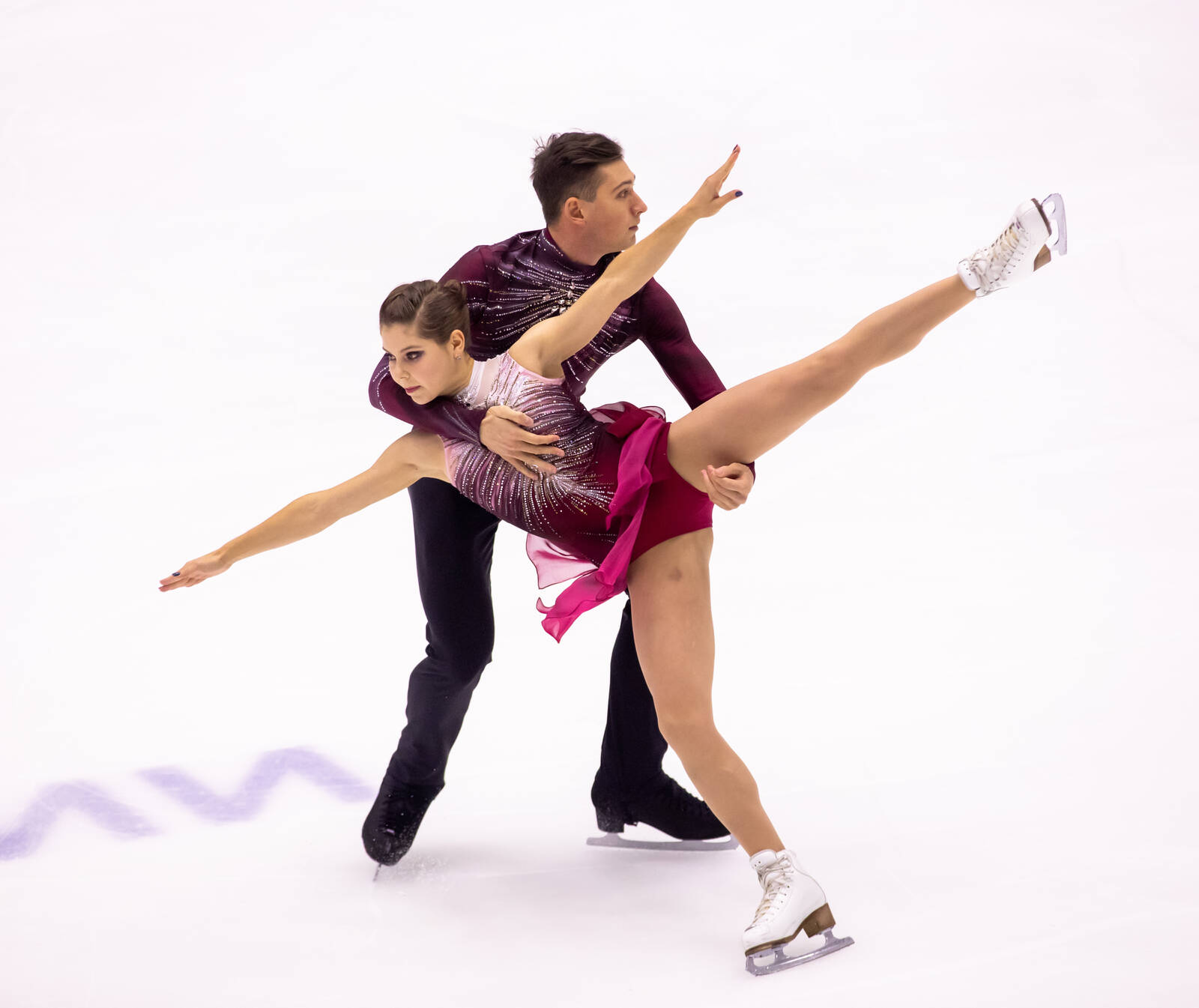
[edit]File:Anastasia Mishina, Aleksandr Galliamov - 2023 Russian GP Stage 4 - 03.jpg is sourced to this (direct link)Ministry of Sports of the Republic of Tatarstan website. It is licensed using {{Tatarstan.ru}}. The main website for the Republic of Tatarstan does state "All materials from the site are available under the license: Creative Commons Attribution 4.0 International" at the bottom of the page, but it's not clear whether that also applies to the Ministry of Sports' website since no similar mention of any licensing on it that I can find. Is this file OK as licensed? FWIW, the licensing of the file is being as about at en:WP:MCQ#File:Anastasia Mishina, Aleksandr Galliamov - 2023 Russian GP Stage 4 - 03.jpg. -- Marchjuly (talk) 02:27, 10 March 2026 (UTC)
- @Marchjuly: You weren't looking hard enough. Right on the page linked in the file description (and the root page either), there's a footer: All site content is available under the Creative Commons Attribution 4.0 International license. Apparently, you simply didn't see this footer because it was overcovered by a cookie policy banner you forgot to remove. A tempest in a teapot. Komarof (talk) 05:48, 10 March 2026 (UTC)
- Thanks so much Komarof for finding that. -- Marchjuly (talk) 06:16, 10 March 2026 (UTC)
Are these stones with inscriptions sculptures?
[edit]I'm a Russian-speaking Commons:License reviewer, and was asked on my talk page to review these four images of a monument in Dagestan from a YouTube video:
_(1).jpg)
_(2).jpg)
_(3).jpg)
_(4).jpg)
I told the submitter that these were pictures of relatively recent sculptures (1989), and Commons:Copyright_rules_by_territory/Russia#Freedom_of_panorama means we need the release of the sculptor, not just the photographer. He disagrees, he says they're not sculptures, they're just uncut rocks with text. The YouTube video has a release (bottom, in comment by videographer). What do people think? --GRuban (talk) 13:02, 10 March 2026 (UTC)
- Monuments like this are routinely deleted from Commons, but they can not be speedy deleted, they should go through the deletion process. Ymblanter (talk) 17:17, 10 March 2026 (UTC)
- I live not far from there and can confirm that these are two natural stones without authorship. The monument was erected by all the people.
- Can you confirm that the author of the photo gave permission? Then it would be easier for me to transfer them to Wikipedia. Takhirgeran Umar (talk) 19:54, 10 March 2026 (UTC)
- I see nothing copyrightable here. Komarof (talk) 14:48, 11 March 2026 (UTC)
Is this above TOO?
[edit]Hello, I am wondering if this crest from enwiki en:File:RCACS Crest.svg is above COM:TOO Canada or it should be recreated as a free version.
Given that File:Banner_of_the_Royal_Canadian_Air_Cadets.png uses another version of the same crest (available on en:File:RCACS Crest.png) Wolfy13399 (talk) 19:46, 10 March 2026 (UTC)
- After doing some research, it seems that the design has been used on badges since at least 1976. I cannot find original dates for the crest itself Wolfy13399 (talk) 22:42, 10 March 2026 (UTC)
LongIslandRapArchive
[edit]received this message:
I am Sport G from Sport G and Mastermind. This page and photos are about my life and are my photos music and art.
A file that you have uploaded to Wikimedia Commons, File:Sport G And Mastermind "Then And Now".jpg, is a derivative work, containing an "image within an image". Examples of such works would include a photograph of a sculpture, a scan of a magazine cover, or a map that has been altered from the original. In each of these cases, the rights of the creator of the original must be considered, as well as those of the creator of the derivative work.
While the description page states who made this derivative work, it currently doesn't specify who created the original work, so the overall copyright status is unclear. If you did not create the original work depicted in this image, you will need to specify the owner of the copyright.
Please edit the file description and add the missing information, or the file may be deleted. If you created the original content yourself, enter this information as the source. If someone else created the content, the source should be the address to the web page where you found it, the name and ISBN of the book you scanned it from, or similar. You should also name the author, provide verifiable information to show that the content is in the public domain or has been published under a free license by its author, and add an appropriate template identifying the public domain or licensing status, if you have not already done so. Please add the required information for this and other files you have uploaded before adding more files. If you need assistance, please ask at the help desk. Thank you! LongIslandRapArchive (talk) 23:45, 10 March 2026 (UTC)
- Convenience link: File:Sport G And Mastermind "Then And Now".jpg. - Jmabel ! talk 05:16, 11 March 2026 (UTC)
- @LongIslandRapArchive: are you saying you are Sport G, or that you received a message from Sport G? Your wording here is unclear. If you are Sport G, then we can probably sort this all out, though it may take some doing: copyrights normally belong to the photographer, not the subject of the photo.
- Also, though, if you are Sport G, then your en:Draft:Sport G and Mastermind is probably a problem. On en-wiki you are generally not supposed to write articles about yourself. See their policy on conflicts of interest, and I really recommend reading that, because otherwise you are likely to find your account blocked on en-wiki. - Jmabel ! talk 05:27, 11 March 2026 (UTC)
Most VRT tickets from Serbia are meaningless
[edit]Under Serbian copyright law, moral rights are super wide-ranging, and include the power to control derivative works and the "integrity" of your work (people regularly get €100+ for websites cropping their photos here), and these, like moral rights elsewhere, can't be transferred by contract. This means that works-for-hire can't be released under a free license by employers at least on those grounds, but also probably not at all, because economic/pecuniary rights are only granted to the employer for 5 years, and even then only to the extent necessary for the employer's business activity, unless a contract says otherwise (which we have no proof of). So unless VRT tickets literally come from the author themselves, they're basically invalid. If it's an entire website released under a free license (say, vs.rs) there might be edge cases where photographers consented to a free license in their contracts, but that's unlikely, and we have no proof of that. Not sure if this has been discussed anywhere, but it seems like something should be done about it. JustARandomSquid (talk) 14:32, 11 March 2026 (UTC)
What to do with the template, referring to a website, which is under ARR now? The creator insists there were free license back in the day, but web.archive can't help find the date of change. 28 files are in Category:Media from Mfa.uz. Komarof (talk) 14:55, 11 March 2026 (UTC)
- @Komarof I chose a random image File:Meeting of Sadyr Japarov and Abdulaziz Kamilov.jpg, and found its archive from 2022: [4]. At the bottom of the page, it does indeed states:
Официальный веб сайт Министерство иностранных дел Республики Узбекистан Все материалы сайта доступны по лицензии: Creative Commons Attribution 4.0 International При использовании материалов, опубликованных на данном сайте, ссылка на www.mfa.uz обязательна
- which roughly translates to:
Official website of the Ministry of Foreign Affairs of the Republic of Uzbekistan All site materials are available under the license: Creative Commons Attribution 4.0 International When using the materials published on this site, a link to www.mfa.uz is required
- So, I would say the template is most likely valid at least for files until 2022 (I haven't look for the date of the website change). Thanks. Tvpuppy (talk) 20:53, 11 March 2026 (UTC)
- Thank you, but I had no doubt that the template was created properly at the time. The question is, what should we do with it now. Should we add an expiration date (but which one exactly)? Should we delete it and apply a free license to the files that are confirmed by the web archive? Komarof (talk) 21:03, 11 March 2026 (UTC)
FoP in Bangladesh
[edit]Upon closer and more thorough analysis of the new copyright law, however, it becomes apparent that FoP in Bangladesh has not been entirely abolished. According to the law's precise definitions, ordinary architectural works (e.g., buildings and structures) and sculptures or monuments that are neither carved nor cast in a mould (e.g., the Shaheed Minar, the National Martyrs' Memorial) do not fall within the scope of copyright protection. That is to say, except for carved or mould-cast sculptures, photographs of most public structures in Bangladesh are essentially copyright-free and may continue to be uploaded to Commons as before.
Huge thanks to MS Sakib for initial constructive criticism and restructuring of this text.
Previous FoP discussions about Bangladesh: 2024-09, 2024-10, 2025-02
তবে নতুন কপিরাইট আইনটি আরও নিবিড়ভাবে বিশ্লেষণ ও পর্যবেক্ষণ করে দেখা যায় যে, আইনে স্পষ্টভাবে সংজ্ঞায়িত না হলেও বাংলাদেশে FoP পুরোপুরি বিলুপ্ত হয়নি। আইনের সূক্ষ্ম সংজ্ঞায়ন অনুযায়ী সাধারণ স্থাপত্যকর্ম (যেমন: ভবন, ইমারত) এবং খোদাইকৃত বা ছাঁচে বানানো নয় এমন ভাস্কর্য বা স্থাপনা (যেমন: শহীদ মিনার, জাতীয় স্মৃতিসৌধ) কপিরাইটের আওতাভুক্ত নয়। অর্থাৎ, খোদাইকৃত বা ছাঁচে বানানো ভাস্কর্য ছাড়া বাংলাদেশের বেশিরভাগ পাবলিক প্লেসের স্থাপনার ছবিই মূলত কপিরাইটমুক্ত এবং এগুলো আগের মতোই কমন্সে আপলোড করা যাবে।
এই লেখাটির প্রাথমিক গঠনমূলক সমালোচনা ও পুনর্গঠনের জন্য MS Sakib-কে আন্তরিক ধন্যবাদ।
পূর্ববর্তী FoP সম্পর্কিত আলোচনাসমূহ: ২০২৪-০৯, ২০২৪-১০, ২০২৫-০২
বাংলা: সারাংশ সিদ্ধান্ত
| ||||||||||||||||||||||||||||
|---|---|---|---|---|---|---|---|---|---|---|---|---|---|---|---|---|---|---|---|---|---|---|---|---|---|---|---|---|
আইনি সারাংশ[edit]
|


English: Summary decision
| ||||||||||||||||||||||||||||
|---|---|---|---|---|---|---|---|---|---|---|---|---|---|---|---|---|---|---|---|---|---|---|---|---|---|---|---|---|
Legal Summary[edit]
|
বাংলা: সম্পূর্ণ ব্যাখ্যা
| ||||||||||||||||||||||||||||||||||||
|---|---|---|---|---|---|---|---|---|---|---|---|---|---|---|---|---|---|---|---|---|---|---|---|---|---|---|---|---|---|---|---|---|---|---|---|---|
আইনের সংজ্ঞা ও পরিভাষা[edit]কপিরাইট আইন, ২০২৩-এর ধারা ১৪(১) অনুযায়ী বাংলাদেশে শুধুমাত্র পাঁচ প্রকারের "কর্ম" কপিরাইটযোগ্য।
কপিরাইটের আইনি পরিধি: আইনের ধারা ১৪(১) ধারায় যেসকল কর্মকে স্পষ্টভাবে কপিরাইটযোগ্য বলা হয়েছে, শুধুমাত্র সেগুলোই কপিরাইটযোগ্য। এই ৫টি শ্রেণীর বাইরে যাওয়ার কোনো সুযোগ নেই। আইনে "স্থাপত্য কর্ম"কে সরাসরি কপিরাইটযোগ্য নয় বলা না থাকায় অনেকেই ধরে নিতে পারেন এটি কপিরাইটযোগ্য। কিন্তু আইনি ব্যাখ্যা হলো, উল্লেখকৃত না থাকলে তা কপিরাইটযোগ্য বলে ধরে নেওয়ার কোনো সুযোগ নেই। উদাহরণস্বরূপ, কপিরাইট আইন, ২০০০-এ প্রথমে কম্পিউটারে সৃষ্ট কর্মের মেয়াদ উল্লেখ ছিল না। পরে সুরক্ষা দেওয়ার জন্য আলাদা করে কপিরাইট (সংশোধন) আইন, ২০০৫ (২০০৫ সনের ১৪ নং আইন) প্রণয়ন করতে হয়েছে।[5] কর্ম বলতে সাধারণ ভাষায় অনেক অর্থ বের করা সম্ভব। আইনের পক্ষে পৃথিবীর প্রতিটি শ্রেণির কর্মকে তালিকা করে কপিরাইটমুক্ত বলা সম্ভব নয়। আইনের ধারা ২ দ্বারা এই পাঁচ প্রকারের কর্মকে সুসংজ্ঞায়িত করা হয়েছে। ধারা ২ (১১) অনুযায়ী "কর্ম"-এর সংজ্ঞা:
ধারা ২ (৪০) অনুযায়ী "শিল্পকর্ম"-এর সংজ্ঞা:
ধারা ২(৫১) অনুযায়ী "স্থাপত্য কর্ম"-এর সংজ্ঞা:
ধারা ২(৩২) অনুযায়ী "ভাস্কর্য কর্ম"-এর সংজ্ঞা:
ধারা ২(১২) অনুযায়ী "খোদাই"-এর সংজ্ঞা:
বাংলা একাডেমি আইন, ২০১৩ দ্বারা কার্যরত বাংলা ভাষা বিষয়ক বাংলাদেশি রাষ্ট্রীয় সংস্থা বাংলা একাডেমি। বাংলাদেশ সরকার তার নিজের সরকারি কাজে বাংলা ব্যবহারে বাংলা একাডেমির নিয়ম মানতে নির্দেশনা দেয়।[6] তাদের প্রকাশিত আধুনিক বাংলা অভিধান অনুযায়ী নকশা, মডেল ও ডিজাইনের সংজ্ঞা নিচে দেওয়া হলো। উল্লেখ্য, এই সংজ্ঞাসমূহ মানতে আইন বাধ্য (binding) নয়। নকশার non-binding সংজ্ঞা:
মডেলের non-binding সংজ্ঞা
ডিজাইনের non-binding সংজ্ঞা
"স্থাপত্য কর্ম" বনাম "স্থাপত্য শিল্পকর্ম"[edit]উপরের উপধারা সমূহ বিশ্লেষণ করলে এই সিদ্ধান্তে উপনীত হওয়া যায় যে, ২০২৩ সালের কপিরাইট আইনে "স্থাপত্য কর্ম" এবং "স্থাপত্য শিল্পকর্ম" সম্পূর্ণ আলাদা দুটি বিষয়।
আলাদাভাবে সংজ্ঞায়নের কারণ: যদি "স্থাপত্য কর্ম" (ভবন) কপিরাইটযোগ্য না হয়, তাহলে তাকে সংজ্ঞায়িত করা হলো কেন? মূলত "স্থাপত্য শিল্পকর্ম"কে (মডেল বা নকশা) সুস্পষ্টভাবে সংজ্ঞায়িত করার উদ্দেশ্যেই এটি করা হয়েছে। আইনের প্রতিটি স্থানে স্থাপত্য কথার সাথে সাথে নকশা ও মডেল শব্দদ্বয় ব্যবহার করা হয়েছে। এটি ইঙ্গিত করে, আইন প্রণেতারা বাস্তব ভৌত দালানকে আলাদা করে রাখতে চেয়েছেন। লক্ষ্য করলে দেখবেন, "শিল্পকর্ম"-এর সংজ্ঞা রয়েছে ৪০নং উপধারায়, আর "স্থাপত্য কর্ম"-এর সংজ্ঞা রয়েছে ৫১নং উপধারায়। চাইলেই এই দুটিকে একই উপধারায় রাখা যেতো, কিন্তু তা ইচ্ছাকৃতভাবে করা হয়নি, যাতে ভৌত দালান এবং দালানের নকশা গুলিয়ে না যায়। "কর্ম"এর সংজ্ঞার মধ্যে শুধুমাত্র স্থাপত্যের মডেল বা নকশা-কে অন্তর্ভুক্ত করা হয়েছে। "কর্ম" এর মধ্যে "স্থাপত্য কর্ম"তে উল্লেখ্য থাকা বাস্তব ভৌত দালানকে অন্তর্ভুক্ত করা হয়নি। ফলে এই আইনে যদি "কর্ম" শব্দটি উল্লেখ্য করে কোনো বিধি প্রণয়ন করা হয় তাহলে তার মধ্যে "স্থাপত্য কর্ম" অন্তর্ভুক্ত নয় কিন্তু "স্থাপত্য শিল্পকর্ম" ও "ভাস্কর্য কর্ম" অন্তর্ভুক্ত। প্রশ্ন উঠতে পারে "স্থাপত্য কর্ম" এর মধ্যে কর্ম শব্দটি আছে, আবার "কর্ম" এর মধ্যে স্থাপত্য নেই। এই সংঘর্ষের কারণ কী? ধারা ২(৫১) তে "স্থাপত্য কর্ম" শব্দদ্বয় একত্রে উদ্ধৃতির মধ্যে আছে। এটি স্থাপত্য + কর্ম নয়। বরং "স্থাপত্য কর্ম" একত্রে। ফলে এই শব্দদ্বয় একত্রে থাকলে "কর্ম"এর সংজ্ঞার মধ্যে তা পড়বে না। Threshold of Originality (শৈল্পিক গুণ): ধারা ২(৪০) অনুযায়ী "স্থাপত্য শিল্পকর্ম"-এর শুধুমাত্র শৈল্পিক গুণসম্পন্ন অংশের কপিরাইট রয়েছে। ২০২৬ সাল পর্যন্ত বাংলাদেশের কোনো আইন বা আদালতের রায় কী শৈল্পিক বা কী শৈল্পিক না (threshold of originality) তা ব্যাখ্যা করেনি। ধারা ২(৪০) অনুযায়ী "শিল্পকর্ম"-এর সংজ্ঞার (ঘ) নম্বরে "শিল্পসুলভ কারুকৃতি সমৃদ্ধ অন্য কোনো কর্ম" অন্তর্ভুক্ত করা হয়েছে। কিন্তু "স্থাপত্য কর্ম" আইনে থাকা "কর্ম"-এর সংজ্ঞার মধ্যে নেই। "স্থাপত্য কর্ম"কে আলাদা করে সংজ্ঞায়িত করায় তা এই "অন্যান্য"-এর মধ্যেও পড়ে না। বাংলা একাডেমির non-binding সংজ্ঞা অনুসারে "নকশা" বলতে "Floor Plan", রেখাচিত্র বা অবস্থান পরিমাপের মানচিত্র বোঝায়, যা "স্থাপত্য কর্ম"-এর অন্তর্ভুক্ত নয়। আর "মডেল" বলতে স্থাপনার ত্রিমাত্রিক ছোট অবয়ব বা "replica" বোঝানো হয়েছে। অতএব, ধারা ১৪(১) অনুযায়ী শুধুমাত্র "শিল্পকর্ম" (যার মধ্যে "স্থাপত্য শিল্পকর্ম" ও "ভাস্কর্য" অন্তর্গত) কপিরাইটযোগ্য। কিন্তু "স্থাপত্য কর্ম" তথা বাস্তব ভৌত দালানকে কপিরাইটযোগ্য বলা হয়নি। "কর্ম"-এর সংজ্ঞাতেও শুধুমাত্র স্থাপত্যের মডেল বা নকশাকে অন্তর্ভুক্ত করা হয়েছে, বাস্তব ভৌত দালানকে নয়। সিদ্ধান্ত:
ভাস্কর্য[edit]ধারা ২(৩২) অনুযায়ী "ভাস্কর্য কর্ম" হলো খোদাই করা অথবা ছাঁচে বানানো ভৌত শিল্প। ধারা ২(৪০) অনুযায়ী শিল্পসুলভ গুণ থাকুক বা নাই থাকুক, ভাস্কর্য ও খোদাই করা কর্ম কপিরাইট দ্বারা সুরক্ষিত "শিল্পকর্ম"। অর্থাৎ ভাস্কর্যের কপিরাইট থাকার জন্য আলাদা করে Threshold of originality প্রমাণের প্রয়োজন নেই। বাংলা একাডেমির অভিধান অনুযায়ী ছাঁচ ও খোদাইয়ের সংজ্ঞা নিচে দেওয়া হলো (আইনত বাধ্য নয় তথা non-binding): ছাঁচের non-binding সংজ্ঞা:
খোদাইয়ের non-binding সংজ্ঞা
ক্ষোদনের non-binding সংজ্ঞা
সিদ্ধান্ত:
নির্মাণাধীন অবস্থার ছবি[edit]কোনো কর্মের কপিরাইট সুরক্ষা শুরু হয় তার প্রকাশকাল থেকে। আইনের বিভিন্ন ধারায় প্রকাশকাল নিয়ে বিস্তারিত বলা আছে:
বিদেশের মাটিতে স্থাপত্য[edit]
ধারা ১৪(৬)-এর (গ) অনুযায়ী "স্থাপত্য কর্ম" বাংলাদেশে অবস্থিত না হলে তা বাংলাদেশে কপিরাইটযোগ্য না। ধারা ২(২৯) অনুযায়ী স্থাপত্য এক ধরণের "বাংলাদেশি কর্ম"। কর্মের প্রণেতা বাংলাদেশি হলে বা কর্মের প্রথম প্রকাশ বাংলাদেশে হলে তা "বাংলাদেশি কর্ম" বলে বিবেচিত হবে। অপ্রকাশিত কর্মের ক্ষেত্রে, কর্মের প্রণেতা কর্ম সৃষ্টির সময় বাংলাদেশি নাগরিক হলে তা "বাংলাদেশি কর্ম" বলে বিবেচিত হবে। অর্থাৎ, আপনি বাংলাদেশি হয়ে বিদেশে কোনো কপিরাইটযোগ্য স্থাপত্যের ছবি তুলে বাংলাদেশে প্রকাশ করলে, আপনি বাংলাদেশের কপিরাইট আইন ভঙ্গ করেননি। তবে সে ক্ষেত্রে কমন্সের নীতিমালা ও সেই নির্দিষ্ট দেশের আইন আপনার আপলোডের উপর প্রযোজ্য হতে পারে। অতিরিক্ত শর্ত[edit]
পুনরুৎপাদন শর্তের সাথে কমন্সের নীতিমালার সংগতি[edit]কমন্স:লাইসেন্সিং এবং উইকিমিডিয়া ফাউন্ডেশনের লাইসেন্সিং বিষয়ে বোর্ডের প্রস্তাব অনুযায়ী মুক্ত সাংস্কৃতিক কর্মের সংজ্ঞা ১.০-এর শর্ত পূরণকারী যেকোনো লাইসেন্সধারী কর্ম কমন্সে প্রকাশ করা যাবে। কপিরাইট আইন, ২০২৩-এর আলোচ্য ব্যাখ্যা অনুযায়ী "স্থাপত্য কর্ম"-এর ছবি কমন্সে প্রকাশ করা হলে তা সম্পূর্ণভাবে উন্মুক্ত লাইসেন্সযুক্ত মিডিয়াকর্ম হিসেবে বিবেচিত হবে। এই মিডিয়া লাইসেন্স অনুযায়ী ছবিটির ওপর ভিত্তি করে ছবি, ভিডিও, সাউন্ড বা অন্য যেকোনো মিডিয়াভিত্তিক ডেরিভেটিভ করা যাবে। তবে "হুবহু প্রতিরূপ ও ফ্লোর প্ল্যান, আর্কিটেকচারাল ড্রয়িং নির্মাণ"-এর আইনি বাধাটি কমন্সের নীতিমালার সাথে সাংঘর্ষিক কিনা, তা ধাপে ধাপে স্পষ্ট করা হলো: ১. কেবল একটি ভবনের ছবি দেখে হুবহু আরেকটি ভবন নির্মাণের চেষ্টা করা হলে ফ্লোর প্ল্যান, আর্কিটেকচারাল ড্রয়িং এবং অন্যান্য কাঠামোগত ড্রয়িং ছাড়া তা কখনোই সম্ভব নয়। এক্ষেত্রে ছবিটি কেবল একটি রেফারেন্স হিসেবে কাজ করে। একাধিক ছবি দেখে রেপ্লিকা তৈরি করা হলেও, বাংলাদেশের আইনি দৃষ্টিকোণ থেকে সেটি কোনো নির্দিষ্ট ছবির 'ডেরিভেটিভ ওয়ার্ক' বা উদ্ভূত কর্ম নয়, বরং তা মূল মাতৃ-স্থাপনারই পুনরুৎপাদন। যেহেতু আইনের সংজ্ঞায় ভৌত স্থাপনা ("স্থাপত্য কর্ম") নিজেই কপিরাইটের আওতাবহির্ভূত, সেহেতু এর ছবি এবং সেই ছবি থেকে সৃষ্ট ডেরিভেটিভ ওয়ার্কও (যদি আদৌ কিছু হয়ে থাকে) কপিরাইটমুক্ত। তাই এর ছবি কমন্সে আপলোড করার ক্ষেত্রে পুনরুৎপাদন সংক্রান্ত কোনো আইনি বাধা ছবির ওপর বর্তায় লালন। ২. উইকিমিডিয়া কমন্সের প্রতিটি ফাইল যে আক্ষরিক অর্থে ১০০% ভৌত পুনরুৎপাদনযোগ্য হতে হবে, বিষয়টি এমন নয়। কমন্স:কপিরাইট-বহির্ভূত বিধিনিষেধ মূলত কপিরাইট ব্যতীত অন্যান্য আইনি বা নীতিগত বাধাকে বোঝায়। উদাহরণস্বরূপ, একটি গাড়ি পেটেন্ট দ্বারা সুরক্ষিত হলে, গাড়ির ছবি দেখে হুবহু বাস্তব ভৌত পুনরুৎপাদন আইনত দণ্ডনীয়। কিন্তু গাড়িটির ছবি মুক্ত হওয়ার কারণে সেই ছবির মিডিয়াভিত্তিক ডেরিভেটিভ তৈরি করা যায় এবং ছবিটি কমন্সে প্রকাশযোগ্য। একইভাবে, কপিরাইট উত্তীর্ণ টাকার ভৌত পুনরুৎপাদন নিষিদ্ধ হলেও তার ছবি কমন্সে হোস্ট করা যায়। যেহেতু "স্থাপত্য কর্ম" আইনের "কর্ম"-এর সংজ্ঞার বাইরে, তাই এর হুবহু প্রতিরূপ নির্মাণের বাধাকে কপিরাইট লঙ্ঘন না ধরে কমন্স:কপিরাইট-বহির্ভূত বিধিনিষেধ হিসেবে বিবেচনা করা যৌক্তিক। ৩. পুনরুৎপাদন শর্তের সাথে কমন্সের নীতিমালার সংগতির সবচেয়ে বড় প্রমাণ হলো স্বয়ং কমন্সে উপস্থিত বৈশ্বিক ফাইলসমূহ। কমন্স:ফ্রিডম অব প্যানোরোমা ও কমন্স:ডেরিভেটিভ কাজ-এর গাইডলাইন অনুযায়ী, মাতৃ-স্থাপনা কপিরাইটযোগ্য হলেও FoP সুরক্ষার কারণে তার ছবি কমন্সে প্রকাশ করা যায়। এক্ষেত্রে মূল স্থাপনার রেপ্লিকা বানানো বেআইনি হলেও, ছবির উপস্থিতিতে কোনো বাধা নেই। বিশ্বের অন্যান্য দেশের আইনের দিকে তাকালেও এর মিল পাওয়া যায়। কমন্স:এফওপি জার্মানি এবং কমন্স: ফ্রিডম অব প্যানোরোমা অনুযায়ী জার্মান কপিরাইট আইনের §৫৯-এর অধীনে একাধিক কর্মের পুনরুৎপাদনের অনুমতি থাকলেও স্থাপত্যের ভৌত পুনরুৎপাদনের অনুমতি নেই। আলবেনিয়ার কপিরাইট আইনের ৮২ নং আর্টিকেলে FoP থাকা সত্ত্বেও 2D কাজকে 3D বানাতে কঠোর বাধা রয়েছে। তা সত্ত্বেও আলবেনিয়ার File:Bashkia e Tiranës.jpg ছবিটাসহ দেশগুলোর হাজার হাজার স্থাপত্যের ছবি কমন্সে নির্বিঘ্নে হোস্ট করা হচ্ছে।
অতএব, যৌক্তিকভাবে প্রমাণিত হয় যে, বাংলাদেশের কপিরাইট আইনের অধীনস্থ স্থাপত্যের ছবি পুনরুৎপাদনের শর্তটিও উইকিমিডিয়া কমন্সের নীতিমালার সাথে সম্পূর্ণরূপে সংগতিপূর্ণ। ফ্লোর প্ল্যানের, আর্কিটেকচারাল ড্রয়িং পুনরুৎপাদন শর্তের ক্ষেত্রেও একই যুক্তি প্রযোজ্য। স্পষ্টতা[edit]স্থাপত্যের ছবি কপিরাইট সুরক্ষার বাহিরে সে বিষয়ে আইন সুস্পষ্ট। ধারা ১৪ তে সুরক্ষা প্রাপ্ত কর্মের তালিকায় স্থাপত্য নেই। ধারা ২ এর সংজ্ঞাসমূহ যেকোনো অনিশ্চয়তা বা অস্পষ্টতা দূর করে। আইনের পক্ষে কপিরাইট সুরক্ষার বাহিরে থাকা হাজার হাজার প্রকারের কর্ম এক এক করে তালিকাভুক্ত করে "কপিরাইট নেই" বলা সম্ভব নয়। |


.jpg)




English: Full Explanation
| ||||||||||||||||||||||||||||||||||||
|---|---|---|---|---|---|---|---|---|---|---|---|---|---|---|---|---|---|---|---|---|---|---|---|---|---|---|---|---|---|---|---|---|---|---|---|---|
Legal Definitions and Terminology[edit]Under Copyright Act, 2023, Section 14(1), only five categories of "works" are eligible for copyright protection in Bangladesh.
Scope of copyright protection: Only those categories of works explicitly listed as copyright-eligible under Section 14(1) enjoy copyright protection. There is no basis for extending copyright beyond these five categories. Because "architectural work" is not directly stated to be copyright-eligible in the Act, some may assume it is protected. However, the correct legal interpretation is that anything not listed cannot be assumed to be copyright-eligible. For example, under the Copyright Act, 2000, the copyright term for computer-generated works was initially unaddressed; a separate Copyright (Amendment) Act, 2005 (Act No. 14 of 2005) had to be enacted specifically to provide protection.[7] It is not possible for legislation to enumerate every conceivable category of work and expressly declare it copyright-free. The five categories of copyrightable works are precisely defined by Section 2 of the Act. Definition of "work" under Section 2(11):
Definition of "artistic work" under Section 2(40):
Definition of "architectural work" under Section 2(51):
Definition of "work of sculpture" under Section 2(32):
Definition of "work of sculpture" under Section 2(12):
Bangla Academy is the Bangladeshi state institution for the Bengali language, operating under the Bangla Academy Act, 2013. The Government of Bangladesh has directed its own official bodies to follow Bangla Academy's rules in their use of the Bengali language.[8] According to their published Adhunik Bangla Abhidhan (Modern Bengali Dictionary), the definitions of naksha (design), model, and design are given below. Note that these definitions are not legally binding. Non-binding definition of naksha (নকশা) (design):
Non-binding definition of model (মডেল)
Non-binding definition of design (ডিজাইন)
"Architectural Work" vs. "Architectural Artistic Work"[edit]A careful analysis of the subsections above leads to the conclusion that the Copyright Act, 2023 treats "architectural work" and "architectural artistic work" as two entirely distinct concepts.
According to the non-binding definition of Bangla Academy, "design" (noksa) refers to "Floor Plan" or Architectural drawing, sketches, or maps of location measurements, which are not included in "architectural work". And "model" refers to a small three-dimensional representation or "replica" of a structure. Why the separate definitions: If "architectural work" (a physical building) is not copyright-eligible, why was it defined in the Act at all? The primary reason is to precisely delimit "architectural artistic work" (i.e., a model or floor plan). Every instance in the Act where "architectural" appears, the words "design" and "model" follow alongside. This signals that the legislators intended to keep physical buildings separate. Notably, the definition of "artistic work" appears in subsection (40), while that of "architectural work" appears in subsection (51). The two could easily have been combined in a single subsection, but were deliberately kept apart to avoid conflating a physical building with a building's design drawings. The definition of "work" in the Act includes only architectural models or designs. Physical buildings (as described under "architectural work" in subsection (51)) are not included in the definition of "work". Therefore, any provision of the Act that uses the term "work" does not encompass "architectural work" (physical buildings), but does encompass "architectural artistic work" and "works of sculpture". The question may arise: the word "work" is contained within "architectural work", yet architecture is not included within the definition of "work". What is the reason for this conflict? In Section 2(51), the two words "architectural work" appear together within quotation marks. It is not "architecture + work"; rather, it is "architectural work" as a single unit. Consequently, when these two words are used together, it does not fall under the general definition of "work." Threshold of Originality: Under Section 2(40), copyright in "architectural artistic work" subsists only in those elements possessing artistic quality. As of 2026, no Bangladeshi statute or court ruling has interpreted what meets or fails to meet this threshold of originality. The definition of "artistic work" in Section 2(40)(d) includes "any other work possessing artistic craftsmanship." However, "architectural work" (a physical building) is absent from the statutory definition of "work". Because "architectural work" was separately defined, it does not fall within the residual "other" category either. Therefore, pursuant to Section 14(1), only "artistic works" within which "architectural artistic work" and "works of sculpture" are subsumed, are copyright-eligible. "Architectural works" (physical buildings) are not stated to be copyright-eligible, and the definition of "work" includes only architectural models or designs, not physical buildings. Conclusion:
Works of Sculpture[edit]Under Section 2(32), a "work of sculpture" is a physical artistic work produced by engraving/carving or casting in a mould. Under Section 2(40), sculptures and engraved works are copyright-protected "artistic works" regardless of whether they possess artistic merit. In other words, a sculpture need not separately demonstrate a threshold of originality in order to enjoy copyright protection. The Bangla Academy dictionary definitions of "mould" (ছাঁচ) and "carving/engraving" (খোদাই) are given below (these are non-binding): Non-binding definition of "mould" (ছাঁচ):
Non-binding definition of "carving/engraving" (খোদাই):
Non-binding definition of "incision" (ক্ষোদন):
Conclusion:
Photographs of Works Under Construction[edit]Copyright protection for a work commences at the time of its publication. The Act addresses the date of publication in several provisions:
Architecture Situated Outside Bangladesh[edit]
Under Section 14(6)(c), "architectural works" not situated in Bangladesh do not enjoy copyright protection in Bangladesh. Under Section 2(29), "architecture" constitutes a form of "Bangladeshi work". A work is considered a "Bangladeshi work" if its author is a Bangladeshi citizen, if it was first published in Bangladesh, or in the case of an unpublished work if its author was a Bangladeshi citizen at the time of its creation. In other words, if you are a Bangladeshi citizen who photographs a copyright-protected architectural work abroad and publishes that photograph in Bangladesh, you have not violated Bangladeshi copyright law. However, Commons policies and the copyright law of the specific country where the photograph was taken may apply to your upload. Additional Restrictions[edit]
Compatibility of Reproduction Conditions with Commons Policies[edit]According to COM:Licensing and the Wikimedia Foundation's Board Resolution on Licensing Policy, any licensed work that meets the criteria of the Definition of Free Cultural Works 1.0 can be published on Commons. According to the discussed interpretation of the Copyright Act, 2023, if a photograph of an "architectural work" is published on Commons, it will be considered a fully open-licensed media work. According to this media license, media-based derivatives such as photos, videos, sounds, or any other media can be created based on the photograph. However, whether the legal restriction on the "construction of identical replicas and floor plans" conflicts with Commons policies is clarified step-by-step: 1. Constructing an identical building solely by looking at a photograph is practically impossible without floor plans and other structural drawings. In this case, the photograph serves only as a reference. Even if a replica is created by observing multiple photos, from a Bangladeshi legal perspective, it is not a derivative work of a specific photo, but rather a reproduction of the original parent structure itself. Since the physical structure ("architectural work") is itself outside the scope of copyright in the legal definitions, its photographs and any derivative works created from those photographs (if any exist at all) are also copyright-free. Therefore, no legal barrier regarding reproduction applies to the photo when uploading it to Commons. 2. It is not the case that every file on Wikimedia Commons must be literally 100% physically reproducible. COM:Non-copyright restrictions primarily refer to legal or policy barriers other than copyright. For example, if a car is protected by a patent, constructing an identical physical replica of that car by looking at its photo is legally punishable. However, because the photo of the car is free, media-based derivatives of that photo can be made, and the photo is publishable on Commons. Similarly, while the physical reproduction of copyright-expired currency is prohibited, its photos can be hosted on Commons. Since "architectural work" is outside the legal definition of a "work," it is logical to consider the restriction on constructing identical replicas as a COM:non-copyright restriction rather than a copyright infringement. 3. The strongest evidence for the compatibility of reproduction conditions with Commons policy is the presence of global files on Commons itself. According to COM:Freedom of panorama and COM:Derivative works guidelines, even if a parent structure is copyrightable, its photos can be published on Commons due to FoP protection. In such cases, while making a replica of the original structure is illegal, there is no restriction on the presence of the photograph. Similar patterns are found when looking at the laws of other countries. According to COM:FOP Germany, under §59 of the German Copyright Act, while the reproduction of multiple works is permitted, the physical reproduction of architecture is not included. Article 82 of Albania's Copyright Law itself maintains strict barriers against turning 2D works into 3D, despite having FoP. Nevertheless, thousands of architectural photos from these countries, including Albania's File:Bashkia e Tiranës.jpg, are hosted on Commons without issue.
Therefore, it is logically proven that the condition regarding the reproduction of architectural photos under the Bangladesh Copyright Act is fully compatible with Wikimedia Commons policies. The same logic applies to the reproduction conditions for floor plans, architectural drawings. Ambiguity[edit]The law is clear regarding the fact that photographs of architecture are outside the scope of copyright protection. Architecture is not included in the list of protected works under Section 14. The definitions in Section 2 remove any uncertainty or ambiguity. It is not possible for the law to individually list thousands of types of works that fall outside copyright protection and explicitly state "no copyright exists" for each. |
Tausheef Hassan Auntu ✉Talk? 17:39, 11 March 2026 (UTC)
 Strong support: I Don't think it is a loophole rather a design of the law. Tausheef Hassan Auntu ✉Talk? 17:39, 11 March 2026 (UTC)
 Support উপরের সবকিছু অনুযায়ী ঠিকই মনে হচ্ছে। Mehedi Abedin 22:10, 11 March 2026 (UTC)